Bedding Guide
How to Assess Organic Sheets: Weave, Fiber, and Sleep Comfort
“Organic” describes how a fiber is grown or processed; it does not tell you whether a sheet will feel cool, crisp, smooth, or durable. To choose well, look beyond the label. The fiber, weave, fabric weight, fit, care instructions, and your own sleep preferences all shape the experience of getting into bed.
A considered approach can make the search less confusing—and help you find sheets that feel right through more than one season.
Start with what “organic” means
Organic sheets are generally made from fibers grown under a defined set of agricultural standards. In the case of cotton, certification may address how the crop is produced and how it is handled through manufacturing. But the word organic alone does not describe the fabric’s texture, strength, softness, or breathability. Those qualities depend on other decisions made along the way: the length and quality of the fiber, the yarn it becomes, the weave, the finishing process, and the way the cloth is cared for.
That distinction matters because bedding labels often compress a complicated product into a few appealing words. “Organic cotton” tells you something meaningful about the material’s origin, but not whether the finished sheet will have the crisp hand of percale or the smoother surface of sateen. Nor does it, by itself, establish that the sheet will be cool for every sleeper or last for years. Treat certification as one part of your assessment, not a substitute for it.
When a product makes a specific environmental or health-related claim, look for clear details about the standard and the scope of the certification. A certification may apply to the raw fiber, the finished fabric, or a broader production chain. These are different claims. Read the wording carefully, and check whether the label identifies a recognized standard rather than relying on general terms such as “natural” or “eco-friendly.”
Fiber sets the foundation
Fiber is the raw material from which the yarn and fabric are made. Organic cotton is a common choice for sheets because it is familiar, widely available, and adaptable to several weaves. Yet cotton sheets can vary substantially. Differences in fiber length and quality influence how smoothly yarn can be spun and how well the fabric may resist wear. A label that simply says “cotton” does not necessarily disclose all of these details, so compare the complete product description rather than relying on a single headline claim.
Longer, finer cotton fibers can be spun into smoother, more continuous yarns, which may produce a more refined feel. That is useful context, not a guarantee: the final sheet still depends on yarn construction, weave, finishing, and care. A well-made fabric with a straightforward description may suit you better than a highly marketed one if its texture, weight, and maintenance requirements match your needs.
Other plant-based fibers may appear in bedding, sometimes alone and sometimes blended with cotton. Each has its own character and care requirements. Before choosing, consider whether you prefer a crisp or fluid drape, whether you tend to sleep warm, and how much time you want to spend laundering and drying your sheets. Material names can narrow the field, but the hand-feel and construction are what you will live with night after night.
It is also worth separating a fiber’s natural properties from the way a finished fabric performs. A breathable fiber can still be woven into a dense cloth. A lightweight sheet may feel airy but require more careful handling. The construction of the finished textile matters as much as the material named on the package.
Percale and sateen: two familiar cotton weaves
For cotton sheets, two of the most commonly discussed weaves are percale and sateen. Their differences are not a contest between right and wrong. They are two approaches to surface, drape, and feel, and each may appeal to different sleepers.
Percale: crisp and uncomplicated
Percale uses a balanced over-under weave that gives the fabric a matte appearance and a clean, crisp hand. It often feels light and breathable, with a cool-to-the-touch impression when first getting into bed. Some people like its fresh, just-made-bed feel; others find it less silky than they prefer. Percale can soften with use and washing, but its character remains more crisp than glossy.
Sateen: smooth and fluid
Sateen uses a weave that brings more yarn across the fabric’s surface, creating a smoother hand and a subtle sheen. It tends to drape more fluidly than percale and may feel soft or gently warm against the skin. That can be appealing if you enjoy a silky surface or live in a cooler climate. The trade-off is that sateen may feel less airy to some sleepers and can be more susceptible to visible wear, depending on yarn and construction.
These are general tendencies, not universal rules. A lightweight sateen may feel quite different from a heavier one, and percale can vary in crispness and softness. Room temperature, the rest of your bedding, personal sensitivity to texture, and even the way you sleep all influence whether a sheet feels comfortable. If possible, handle a fabric sample before committing. If that is not an option, study the seller’s description, return policy, and care guidance, and look for specific information about weave and fabric weight.
Thread count is often presented as a shortcut for quality, but it is only one measure—and an incomplete one. It describes the number of threads counted in a defined area, but does not tell you everything about fiber quality, yarn construction, finishing, or durability. A very high number is not automatically better. When comparing organic sheets, give more weight to transparent information about material, weave, construction, and care than to a single headline figure.
Fabric weight, softness, and durability
Fabric weight can help you understand how a sheet may behave, though no single measurement predicts comfort on its own. A lighter fabric may feel airy and easy to handle. A heavier cloth may feel more substantial and drape differently across the bed. Weight interacts with weave: a crisp percale and a smooth sateen of similar weight can still feel markedly unlike one another.
Softness is equally complicated. Some sheets feel smooth from the first night; others begin with a firmer or more textured hand and relax after laundering. Finishing treatments can influence the initial feel, but softness alone does not establish quality or longevity. A fabric that feels exceptionally soft in a shop may not necessarily suit someone who prefers a cool, crisp surface. Judge softness alongside breathability, strength, and your preferred texture.
Durability depends on the complete fabric, not just its fiber or price. Repeated friction, washing, drying temperature, detergent, and fit can all affect how sheets age. A fitted sheet pulled tightly over a mattress that exceeds its pocket depth may be under constant strain. A sheet washed aggressively or dried on high heat may wear more quickly than one cared for according to its label. The practical question is not simply whether the fabric is durable in theory, but whether it can handle the routine you are likely to give it.
Look for straightforward construction information: the fiber content, weave, dimensions, pocket depth, and included pieces. If the description gives a fabric weight or explains how the cloth is finished, that can provide useful context. Missing details do not prove a sheet is poor, but clear, specific information makes meaningful comparison easier.
Match the sheet to your sleep preferences
Comfort is personal, and sheets are only one part of the sleep environment. Still, the surface closest to the skin can meaningfully shape how a bed feels. Start with questions about your habits rather than assumptions about what “the best” sheet should be.
- Do you tend to sleep warm? You may prefer a lighter fabric and a weave with an open, crisp feel, such as percale. Consider the room’s temperature and the warmth of your duvet as well.
- Do you like a smooth, soft surface? Sateen may be appealing for its fluid drape and silky hand. If you are uncertain, seek a sample or choose a seller with a clear return policy.
- Do you prefer a cool first touch or a cozy feel? Percale often feels fresher at first contact, while sateen may feel smoother and more enveloping. Personal experience can differ, so treat this as a starting point rather than a rule.
- Is low-maintenance care important? Check whether the sheets can be machine-washed and dried in the way you normally do laundry. A fabric that requires special handling may not fit every household routine.
- Do you have sensitive skin or strong texture preferences? Pay attention to surface feel, seams, labels, and finishes. “Organic” does not guarantee that a particular fabric will suit every individual’s skin.
These considerations are especially helpful when shopping online, where color and styling can dominate a product page. Keep your attention on the details that affect daily use: hand-feel, weave, weight, sizing, and care. A beautiful sheet that slips off the mattress, feels too warm, or demands inconvenient laundering may not be the right choice for your bedroom.
Read certifications and claims with care
Certifications can make product claims easier to evaluate, but they are most useful when you know what they cover. A label may relate to organic farming, restrictions on certain substances, environmental practices, or testing of the finished textile. Those areas are related, but they are not interchangeable. Verify the name of the standard and the specific claim being made; avoid assuming that one certification answers every question about a product.
Look for a clear explanation of the certification on the product page or packaging. Does it apply to the cotton itself, the finished sheet, or a supply chain? Is the wording precise? Can you identify the certifying organization and the scope of its standard? Answers to these questions make it easier to distinguish a verifiable claim from broad promotional language.
Certifications do not settle questions of comfort, fit, or personal preference. Nor do they make care instructions optional. They provide a framework for assessing particular aspects of production; the fabric still needs to work for your body, bedroom, and routine. A thoughtful evaluation combines documentation with practical considerations.
Care is part of the buying decision
Before purchasing, read the washing instructions. Organic cotton sheets are often machine-washable, but recommended temperatures, drying methods, and precautions vary by product. Washing before first use may help remove residue from manufacturing and settle the fabric into its everyday feel. Follow the label rather than assuming all cotton bedding can be treated the same way.
As a general approach, wash sheets with similar colors, avoid overloading the machine, and use detergent according to its instructions. Excess detergent can leave residue; harsh treatment and unnecessary high heat may put additional stress on fibers. If the care label recommends a lower dryer setting or line drying, consider whether that fits your household. The gentlest routine is not always the most practical one, so choose sheets whose care needs you can sustain.
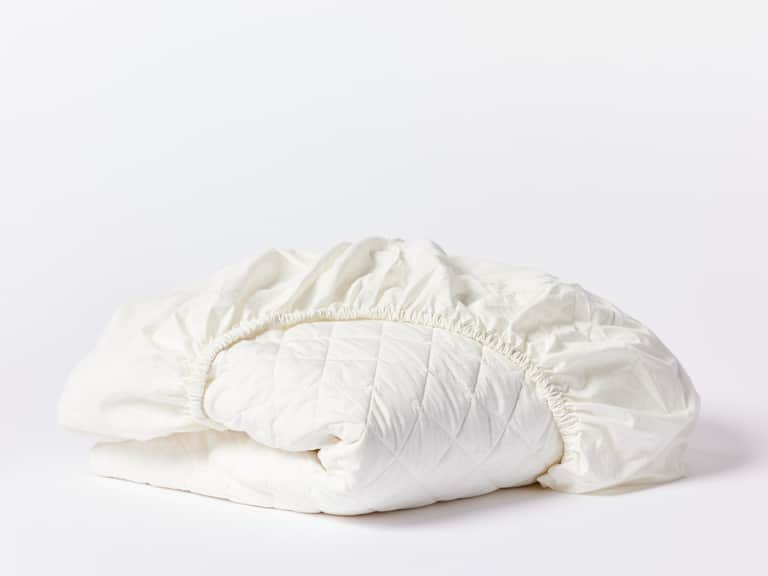
Fit matters, too. Check the mattress dimensions, including its depth and any topper or pad that adds height. A fitted sheet needs enough pocket depth to cover the mattress securely without being stretched to its limit. Flat sheets and pillowcases should also suit the bed and the way you use them. Correct sizing reduces nightly adjustment and can help prevent avoidable strain on the fabric.
Storage and rotation can influence how long a set stays in use. Keeping sheets clean and fully dry before storing them helps avoid musty odors. If you own more than one set, rotating them spreads wear across the collection. These small habits cannot compensate for poor construction, but they can support the useful life of a well-chosen fabric.
A practical comparison checklist
When two sets look similar online, compare their specifications side by side. A short checklist keeps the decision grounded in facts rather than packaging language.
- Fiber: Confirm the exact material and whether the sheet is 100% cotton or a blend.
- Certification: Identify the named standard and what part of production or product it covers.
- Weave: Look for percale, sateen, or another clearly described construction.
- Feel and weight: Use stated details, samples, and return terms to judge whether the fabric is likely to suit you.
- Dimensions: Check mattress size, pocket depth, and the sizes of the included sheets and pillowcases.
- Care: Make sure the washing and drying requirements fit your regular routine.
- Transparency: Prefer descriptions that answer practical questions over claims that rely on vague superlatives.
The right choice is the one you will enjoy using
Organic sheets are not a single category of feel. They can be crisp or silky, light or substantial, relaxed or neatly structured. Fiber provides the starting point; weave shapes the surface; weight and finishing influence how the fabric falls and feels. Certification can clarify certain production claims, while care instructions and sizing reveal whether the sheets are likely to fit your everyday life.
For a fresh, matte, airy impression, percale may be a sensible place to begin. For a smoother, more fluid surface, sateen may be the better match. Neither weave guarantees a particular night’s sleep, and no thread-count figure can substitute for an honest assessment of texture, construction, and fit. Your climate, bedding layers, skin preferences, and laundry habits all belong in the decision.
The most useful question is not whether a sheet is universally ideal. It is whether its material, weave, feel, and maintenance make sense for the person who will sleep in it. Read the label, verify the claims that matter to you, check the dimensions, and choose a fabric you can imagine welcoming at the end of an ordinary day. That is a more reliable route to comfort than any single marketing promise.